
Saturday, March 5, 2016

Perspectives of War


Similarly to the title of this blog, humanities core is a course based upon learning the perspectives of humanity. Whereas last quarter was based on agency and how to analyze the symbolism and syllogisms of texts, this quarter was focused on war theory and torture and how to analyze films. 


Upon reflection....


Looking back at the beginning of the quarter, I had the simple belief that history is what we memorize from a textbook. Specifically focusing on war history, it was a simple formula of plugging in dates and concepts and memorizing the order and importance of events.


It was not until this course that I was brought to understand that textbooks are based on the writer's perspective of the events. One person's perspective of a car accident from across a road can be completely different that someone in the car next to the collision. In relation to the textbooks seen (to the right), both textbooks are written by authors in the US. However, is the US perspective accurate on teaching it's newest generations about the entire world? Is the information accurate enough to determine the mindset of the new leaders of our country? <- Who makes sure that these questions are answered? The government is the entity that makes sure our textbooks are up to date and filled with proper information but how can we know for sure that what's being sold as the facts is truly the facts? Human error is completely plausible due to the fact that people are filled with bias and the capacity to misconstrue information into false assumptions.

Now realizing this, this quarter showed me that the only way to fully make sure that one is closest to gaining the truth is by receiving information from multiple sources. Referencing back to the car analogy, in order for a police officer or a lawyer to find out who was truly at fault they must interview all witnesses. Since the person across the street and the person in the car next to the collision have different recollections, it's up to that officer or lawyer to determine what is more reasonably accurate. Or make the decision to look deeper and find more sources for evidence. This is essentially the same when it comes to researching a topic, especially war with its multiple dimensions, one must find all sources available and determine what could be the truth.

Perspectives are encompassed by the mind and the mind is only capable of understanding the things that are put into it, seeking truth requires the right sources of knowledge. I believe that this concept is one of the most important to be grasped out of this quarter.

Sunday, February 21, 2016

13 Hours: The Secret Soldiers of Benghazi


Directed by Michael Bay, 13 hours: The Secret Soldiers of Benghazi, is based off a book which was then based off the true conflicts in Benghazi. 

SPOILER WARNING! 

             The movie starts with introducing the setting, "The opening text states that there were over 200 American outposts in Libya until 2012. Following the 2011 civil war, the deposition and execution of dictator Muammar Gaddafi, Benghazi became one of the most violent places in the world, forcing the United States to pull their outposts out of there, all except for one called The Annex, which is protected by a team of CIA contractors, the Global Response Staff (G.R.S.)." 
                       (http://www.imdb.com/title/tt4172430/synopsis?ref_=ttpl_pl_syn)

Focusing on a team of 6 soldiers placed in this highly dangerous part of the world, it allows for the audience to grow to care about the dynamic between these men. It even highlights each of the men calling home, by doing this, it creates a sense of sympathy from the viewer to the character. However, in showing this brutality towards characters the audience cares for, does this mean it is an anti-war film or rather a glorification of brutality with the US coming out strong at the end?


The movie introduces the dynamic and set up of the situation at hand, then it moves to present a new security issue. A US ambassador comes to Libya to speak, and his compound needs to be protected. The security detail at hand for the ambassador is presented as a bunch of "newbies" and when the team of 6 goes to check it out they immediately find it lacking The "newbies" ignore the team's warnings about the lack of protection and the audience can then predict from this point that this is where the main issue will happen. 

It ends up with the ambassador's compound being brutally attacked, with the main team of 6 fighting the restrictions placed on them to go assist as time runs out for the ambassador and his protection team. After the team finally goes over and salvages what they can, the fight moves to their own top secret compound. Scenes of countless attacks and counter attacks later, the team makes it out alive but not unharmed. The movie ends with a sense of the US prevailing over all and coming out from the battle strong. However, due to the fact that this is a war movie it does not end completely "happily ever after", but rather it also shows the loss of life and destroyed mental states of the people involved. 

After I personally watched the movie, walking out of theater my mind was reeling with emotion but also with the thought that, "wow this was based off true events." That, I believe, is the power of the movie, the fact that it had a lasting image in my mind even now weeks after I've seen it. 

Besides this, looking at the movie from an analytical standpoint, it does present the middle east as the enemy without giving much info about the true conflict of their country and the issues at hand for the civilians there. However, what I found intriguing in what they DID show, was that there were civilians going about their daily lives watching television while the brutality happens around them and they seem completely desensitized to any of it. That itself was powerful to us, the audience, because we were all shocked and disturbed by the violence. Then we were shocked to see how normalized violence is there that the civilians are unaffected by it. It causes the audience to compare that lifestyle to their own, which I did.  

Overall, the movie did a good job of providing that patriotic spirit while showing the troubles of another country. However, I do not find that the violence shown in 13 Hours is a well enough deterrent towards violence in general, but rather it shows that US violent force is necessary although there are repercussions. This is more understandable because the movie was meant as entertainment rather than a documentary of what truly occurred on a factual basis. Moving on towards future outlooks on entertainment, a viewer should keep in mind the medium, genre, and the emotions that come from it. Thinking about how entertainment affects you makes you more alert to how your mind is being controlled by the media. 

Violence presented in the media has an everlasting control on the mind of the subject viewing it, whether it's presented as negative or positive is where the issue comes to play.
13 hours presents violence from the US as necessary, while violence from the people of Libya is negative.

It's all about the presentation of the facts. 


Thursday, February 18, 2016

Hour of Torture

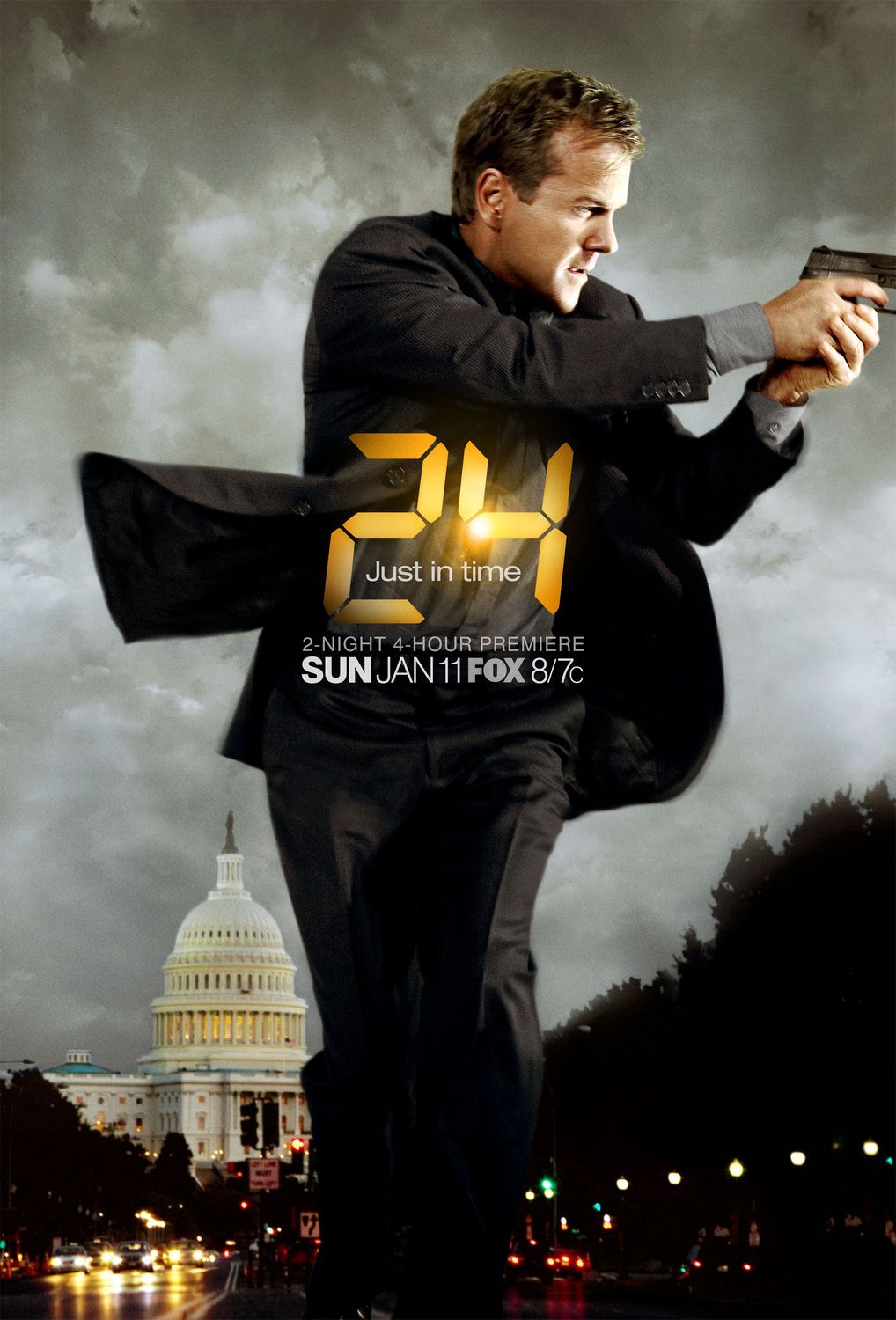
The clock is ticking down, anxiety builds as the viewer roots for protagonist federal agent Jack Bauer to get the vital information needed to take out a nuclear threat and save millions of lives. “24” was a hit show on the Fox network with a plot aligned around Jack Bauer and the C.T.U (counter-terrorism unit). Each season is based on the 24 hours of one day, and each episode is one hour of action, drama, and political thriller.  The show covers Bauer fighting to neutralize threats such as; terrorist plots, presidential assassination, nuclear threats, sleeper cells, and much more that Bauer often reluctantly finds himself dealing with. A main tactic Bauer uses in neutralizing threats is torture, regardless of the risks in the show to his life or his job. He validates his use of torture by claiming the information to be crucial to the safety of civilian lives. The show's validation of torture creates a misconception in the minds of the audience about torture itself allowing for a more desensitized reaction.


Bauer’s use of torture is regarded as excessive 
even within the show, but due to the fact that it manages to be justified somehow in the plot, it allows both the characters and the viewers to “accept” it as a necessary evil. Some of the torture done in the show includes, bone breaking, electrocution, chemical injections, as well as various mental forms. As a personal fan of the show, I found the various forms of torture to be cringe worthy indeed, however with the clock ticking down on every episode, I also found myself pining for that crucial information as well. However, looking at the show from an objective standpoint, it completely desensitizes the audience to the true horrors of torture in many ways. 

Torture is presented as a necessary action in order to save lives and therefore is justified. Torture is also normalized through the fact that it occurs so frequently in each of the episodes that the audience grows used to this form of information gathering. Ultimately, torture is desensitized through both the justification and the increased occurrences. In addition, characters of the show often “recover” from torture immediately showing no mental duress. This lack of the real negative consequences of torture being presented in the show adds to the whole concept of torture being a necessity in information seeking by the government. The show even goes further and leaves the legal aspect behind when in one instance Bauer quits his job and leaves his associates in order to commit an illegal act of torture which was then validated by the show in his gain of crucial information. Leaving the legality of torture behind, “24” moves toward the morals of the situation, if hurting this one life could save millions, why not? 

Due to all these aspects of desensitizing and moralizing torture, I believe that, although entertaining, it creates a negative perception of torture. Viewers of the show are going to be more willing to accept the use of torture in information seeking by the government because they are falsely presented to true nature of it and the repercussions. This misconception is a detriment to the mindset of society however, “24” is not the only outlet that causes this. Violent video games, movies, and music all contribute to this mass desensitization in society today. However, this does not mean the children of the future are doomed to live in a violently corrupt world because this misconception can be remedied with education on the real life situations that involve these acts of violence.                                       

Thursday, January 28, 2016

Remembering War

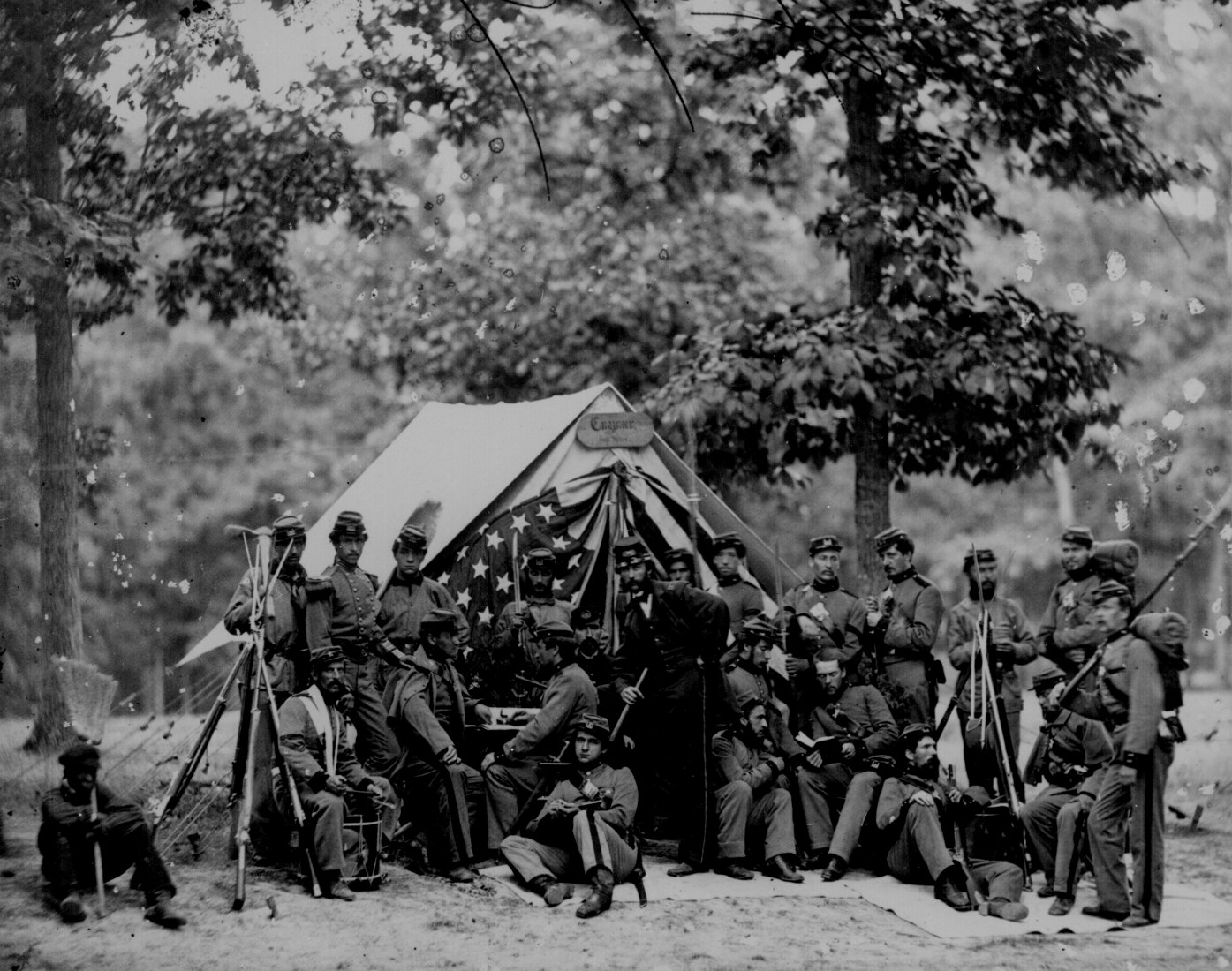
How is the American Civil War remembered today? Are there conflicting understanding of the reason for the war, or what the war was "about"?


The American Civil War causes a couple main thoughts in the mind of a young student who has taken history classes growing up. Thought such as slavery and abolition, confederacy vs union, and a time of extreme internal conflict in this country.


 Slavery was an extreme case of dehumanization of an entire race of people for the benefit of another, as a result when some minds were awakened to the treachery an abolition movement began. Those in favor of the abolition made up the Union side of the war, while those against made up the Confederacy.  
"a time of extreme internal conflict in this country" <- this is a part of my own remembrance of the war. Today, the education system provides a section of learning in a class every so often to provide the generations with knowledge about what occurred in our history. To learn from the past is how to best prevent repetition of mistake in the future. This is how the education system "remembers" the Civil War by providing the lessons to be taken from it to the future of our society. 
When it comes to the reason of the war, that could be difference for anyone studying it. The main concept shared was that its surrounded the topic of slavery. Posing questions like can people be considered "property". While students these days are being taught the main overhead facts of the war, it is only until Humanities Core this year where Professor Fahs shares a more personal look at the war that I really understood it. Looking at pictures, poems, and texts about the war and how it affected difference people specifically provided a closer connection to the past. Re-envisioning how it could have felt back then versus just learning the dates and facts of what occurred. 
With this new combination of facts and feelings, I feel like I have more an understanding of the war as a whole. I will never fully be able to grasp how it was back then, however, with a more personal touch, I can attempt to provide a better remembrance. 


Tuesday, January 19, 2016

A Sight in Camp


A SIGHT in camp in the day-break grey and dim,
As from my tent I emerge so early, sleepless,
As slow I walk in the cool fresh air, the path near by the hospital
tent,
Three forms I see on stretchers lying, brought out there, untended
lying,
Over each the blanket spread, ample brownish woolen blanket,
Grey and heavy blanket, folding, covering all.


Curious, I halt, and silent stand;
Then with light fingers I from the face of the nearest, the first,
just lift the blanket:
Who are you, elderly man so gaunt and grim, with well-grey'd hair,
and flesh all sunken about the eyes?
Who are you, my dear comrade? 10

Then to the second I step--And who are you, my child and darling?
Who are you, sweet boy, with cheeks yet blooming?

Then to the third--a face nor child, nor old, very calm, as of
beautiful yellow-white ivory;
Young man, I think I know you--I think this face of yours is the face
of the Christ himself;
Dead and divine, and brother of all, and here again he lies.

-Walt Whitman


In this quarter of HumCore we have been doing a lot of reflection on works of art and to me, poetry is a work of art like any of the paintings and sketches analyzed in class. A past teacher once told me that every word a writer inserts is deliberate and must be recognized when thinking about the text. I believe that this especially true in poetry as they are often shorter than novels, so the emotions are more compact and attention to details such as punctuation is necessary.


The overall tale of this poem is that of "a sight in camp", a glimpse of this specific moment of the war. While reading it I envisioned that the world was frozen in time and then Whitman practically walked through the scenery and wrote of what he saw. The poem starts with Whitman exiting his tent and seeing three bodies near the hospital tent. These three bodies come from men of different age groups; a small child, a young man, and an older gentleman. Whitman reaches the old man first, then the small child, and lastly the young man.


The main concept I got from this piece is the age groups, I believe that age is shown to not only evoke empathy from the reader but also to show that murder in war has no discrimination. Everyone falls victim to the violence. In reading the words, "Who are you, sweet boy, with cheeks yet blooming?", that was the moment everything sunk in for me. Whitman states that the boy's cheeks have yet to bloom, the child has not even gotten to adolescence yet and his life was taken away. The shortness of life, the lack of experience, shown here in these words provides insight to the treachery of war. Although Whitman speaks of an older and younger man, it was really the child that sparked the most emotion out of me. Ultimately, as a whole Whitman covers the fact that all three of these people no matter how much they got to live all had to succumb to a brutal death.


Wednesday, November 18, 2015

1 down, 2 to go

Humanities Core, oh how far the journey has been and yet there's still more to go.

At this point in time, reflecting on this past quarter it has been both ups and downs. A lot of times during lecture I would feel like....


But then I would go to discussion and suddenly I'm like..


Overall the most prominent thought I'm leaving this quarter of humanities core with is that there are many types of writing that can have different influences on the meaning of the text. I would never look at HOW the text was written before, I would simply just read and get the main point or story. As a reader I had never thought about how everything the author wrote had a purpose for being in the story, even more, I never realized that even the things that are not written are also important to notice. My favorite example of this was in Memorial by Alice Oswald. Just the way she subtracted the glory of killing presented in the Iliad was really interesting to me because it really did become a powerful anti war piece overall. 

As far as my definition of war, it hasn't really changed for me, due to the fact that I've always viewed it as a complicated negative situation. One point that really struck me that correlates to war is when Professor Izenberg said that in the Iliad the warriors, specifically Hector, had to strip away the same values he's protecting to fight for his city. To protect their culture, peace, and home the soldiers must against those very beliefs in order to save it for others. That point was just an eye opener for me because I had never thought about it that way. It just increased the amount of respect I have for our soldiers fighting for our freedom here in the US. 

After experiencing Humanities Core for 1 quarter, I can truly say that I am excited to move on and learn new things in the quarters to come. Even if it does mean I have to read all night. 

Tuesday, November 3, 2015

When words come to life...

...the power lies in the expression


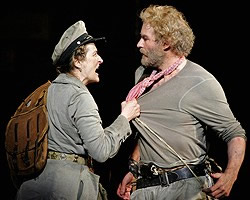
Mother Courage is a play written by Bertolt Brecht. The pictures on the right show both of the most recent translations and presentations.

Although the text is written for performance, the interpretations from the reader directly reading the text versus the viewer watching the play can be very different. To put this into perspective, a lot of book lovers get really frustrated after they see the movie. What happens in these situations is that the individual mind has it own "picture" of what the characters look like and how they sound and such. The movie is then someone else's viewpoint of how THEY interpreted it. So when the Divergent and Maze Runner fans feel upset that "THE MOVIE IS WRONG" because there were changes made, know that it's someone else's representation of what they feel it is. The most recent outrage I've heard about is the Maze Runner: Scorch Trials movie. I remember my best friend after seeing the trailer, "WHAT. Why is TERESA WITH THEM?!! That's not what happened in the book!". Or my own rage when in The Host they took out a major character whose death seriously  affected the plot!! Ultimately, us viewers and readers have to realize that movies are someone's interpretation of the book. That the words in pages can be expressed in many different ways because words can have different meanings to different people.

Cover of the most recent edition of the book
However, those examples have to do with novels turned to movies. In reference to class,  Brecht wrote Mother Courage as a play, its' purpose is to be performed so the changes are minimal in comparison.

The focus scene I'm going to compare is the very first scene of both the play and the book. It features an army recruiter, sergeant, and it introduces Mother Courage and her three kids; Swiss Cheese (the honest one), Kattrin (the mute with compassion), and Eiliff (the brave one)

For a focus point to let you know how it should look in the play, CLICK HERE TO WATCH  . This isn't the one with Meryl Streep, but it gives you some insight as to how it's acted.

For the most part the text is similar to the play with what occurs within the story. But the difference lies in the power of the actor's performance. They way they make the audience follow their every movement and every word.

One of the prominent moments in the play is when Mother Courage pulls a knife and then yells, "We're friendly people!". The irony there shows the disconnect between her actions and her words. In the book it's also noticeable but not prominent or as funny to the reader as it is to the audience. While reading the book I was personally more focused on what would happen with Eiliff rather than picking up on that disconnect.

Due to the fact that the text was meant to be performed it shows that there's inherent value in it being spoken and the audience visualizing the actors. There's always a difference between writing for dialogue and writing for only reading purposes. Dialogue has slang, it often has more voice, and it's easier to get straight to the point with what the characters are stating. But performance shows how they feel, it presents Brecht's ironic satirical tone more outwardly which is the point of the text.

Altogether, the play itself gives a better representation of the purpose of the text. It allows the audience to more simply grasp how they're supposed to feel rather than reading and then thinking about it after.

When words come to life,
the power lies in the expresssion.